 Photo Courtesy: nenow
Itanagar: Villagers in Geku squared off with security forces in Arunachal Pradesh’s Upper Siang district. The confrontation broke out during a protest against the proposed Siang Upper Multipurpose Project, known as SUMP. Locals gathered to fight the dam project and the arrival of Central Armed Police Forces in their village.
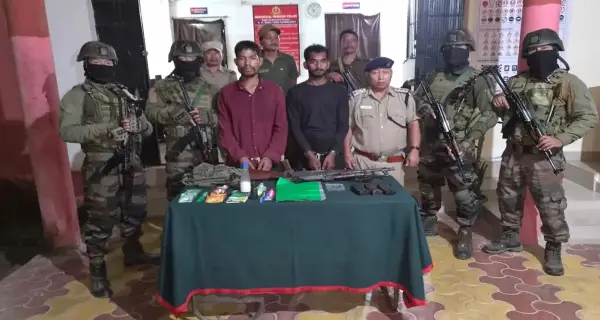
The protest turned ugly. Participants damaged government vehicles, forcing security personnel to move in and clear the area. Officers arrested four people following the chaos. Tensions remain high throughout Geku as opposition to the project continues to simmer.
Chief Minister Pema Khandu heads to the region this Tuesday. His visit comes as local anger over the SUMP project shows no signs of cooling. Officials described the event as a situation where "tensions prevailed in Geku village of Arunachal Pradesh’s Upper Siang district following clashes between villagers and security personnel."
Updated at 29th September 2026 at 2:00pm
The four individuals previously detained by Yingkiong Police following the confrontation have been released after an inquiry. The Superintendent of Police for Upper Siang confirmed the release and urged residents to keep the peace.
Khandu’s upcoming trip covers both Boleng and Yingkiong as part of a broader two-day tour of the Siang belt. While locals in Geku suspect the visit aims to push the project and related pre-feasibility activities, the Chief Minister has insisted he will not force the project on the community. He framed the dam as a national necessity to counter upstream Chinese developments on the Yarlung Tsangpo, which he labeled a potential water bomb for India.
Tensions flared after authorities began housing security personnel in an unoccupied hostel at Geku Government College. Beyond road blockades, villagers have explicitly ordered security teams to vacate the area and halted further troop deployments. Local officials recently held a strategy meeting in Boleng to coordinate logistics and security, though they emphasized the need for better communication with the community regarding the pre-feasibility reports.
Updated at 30th September 2026 at 1:47am
Four individuals detained by Yingkiong police after the Geku confrontation are free following an inquiry. The local Superintendent of Police confirmed their release and called for calm. Security personnel had been bunking in an empty Geku Government College hostel, sparking protests that included road blocks and demands for troops to vacate the village.
Chief Minister Pema Khandu stated on September 29 that the massive 11,000 megawatt project hinges on a Preliminary Feasibility Report expected to take three months. Khandu said if experts deem the dam technically impossible to build in the seismic zone, the government will drop the matter. If it moves forward, he promised full consultations on land acquisition, compensation, and relocation.
Khandu plans to spend up to ten days in the Siang belt during his next visit to hear residents out. He warned officials that their work carries heavy consequences for future generations, urging them to lead with better information. Anti-dam groups, including the Adi Bane Kebang-United, maintain their opposition, citing threats to local livelihoods and river systems.
Updated at 30th September 2026 at 1:50pm
During his visit, the Chief Minister chaired the inaugural meeting of the Empowered High-Level Committee for the project in Yingkiong. Headed by Minister Ojing Tasing, the cabinet-appointed body is tasked with supervising the upcoming three-month survey. The panel aims to coordinate the technical assessment that will determine if the massive structure is viable within the local seismic zone.
Khandu has turned the screws on the local bureaucracy, ordering the chief secretary to initiate action against any government employees caught pushing anti-dam sentiments. He urged staff to leverage their social standing within tribal society to advocate for the project, arguing that officials bear a direct responsibility for the long-term future of the region.
Meanwhile, the opposition is widening its reach. The Adi Bane Kebang-United has reached out to Mising community organizations in Assam's Dhemaji district, hoping to build a coalition against the potential downstream environmental impact of the dam. The groups maintain that the project threatens the core of their land, forests, and cultural survival.
Updated at 30th September 2026 at 5:51pm
Khandu pegged the potential investment for the project at between Rs 1.5 lakh crore and Rs 2 lakh crore. He noted that if construction eventually moves forward, it could drive local economic growth through road building, quarrying, and the supply of construction materials.
Regarding the three-month survey process, Khandu specified that workers would perform limited technical investigations, including drilling at select sites to pull rock samples for lab analysis. He maintained that this work involves no clearing of forests or destruction of homes, farms, or private property.
The Chief Minister alleged that more than 100 local households initially signed in support of the survey, but claimed that intimidation and property damage later forced some supporters to back away. He urged the public to pursue dialogue in lieu of violence, stating, "You can be negative about the project. In democracy... But it does not mean that you have the right to go to another village, damage its property, destroy the road built by the government, break the water supply or irrigation channel."
Khandu also referenced the threat of sudden, high-volume water surges, citing disasters in Sikkim as a warning for the Siang Valley. He argued that adequate water storage is necessary to mitigate risks from extreme weather and protect downstream residents during dry winter months.
Updated at 30th September 2026 at 9:49pm
Pasighat West MLA Ninong Ering stepped into the fray to back the project, citing his experience on the Brahmaputra Flood Control team in the 1970s. Ering argued that India has the know-how to build earthquake-resistant structures and pointed to the Bhakra Nangal and Hirakud dams as proof that large-scale infrastructure can deliver flood control, irrigation, and tourism.
Ering urged locals to let the feasibility study proceed to better understand the project risks and benefits. Meanwhile, the Adi Bane Kebang-United continues to press deputy commissioners to scrap the plan entirely, pointing to the potential ruin of local forests, river systems, and cultural life as the primary reason to block all survey teams.
Updated at 1st October 2026 at 2:00am
Beyond the local friction in Arunachal, the project is drawing heat from across the border in Assam. Former Assam opposition leader Debabrata Saikia has fired off a letter to President Droupadi Murmu, demanding a comprehensive, independent look at how the 11,000 MW project could wreck Assam's river system. Saikia wants a full breakdown on sediment transport, flood peaks, and disaster scenarios like dam failures or earthquakes, arguing that the state's safety hinges on scientific scrutiny that goes beyond the project proponent's own paperwork.
Saikia is pushing for a formal seat at the table for downstream communities and experts, not just a rubber-stamped approval from the top. He is calling for an automatic, real-time warning system that links the dam site to vulnerable districts in Assam, alongside a white paper from both state governments that lays out the real risks and safeguards. While he stressed that he is not against regional development, he warned that pinning the fate of the Brahmaputra on a single project requires more than just political promises.
Updated at 1st October 2026 at 1:48pm
The situation turned chaotic in Yingkiong on Wednesday as protesters swarmed the residence of Tuting-Yingkiong MLA Alo Libang. Demonstrators broke into the property, where several ministers and MLAs were staying, as the unrest hampered the movement of state leadership.
Protesters also blocked the Yingkiong-Komkar-Geku road and routes to Dite Dime, effectively trapping Deputy Chief Minister Chowna Mein, Cabinet ministers Ojing Tasing and Nyato Dukam, and the Chief Minister's adviser, Ninong Ering, at the Grand Siang Hotel. The crowd prevented the group from reaching a scheduled government interaction.
Agitators burned a police vehicle near the Dite Dime bridge. Clashes broke out when security teams intercepted a rally attempting to march from the general ground toward the lower market, signaling a wider escalation in the fight against the project survey.






Comments