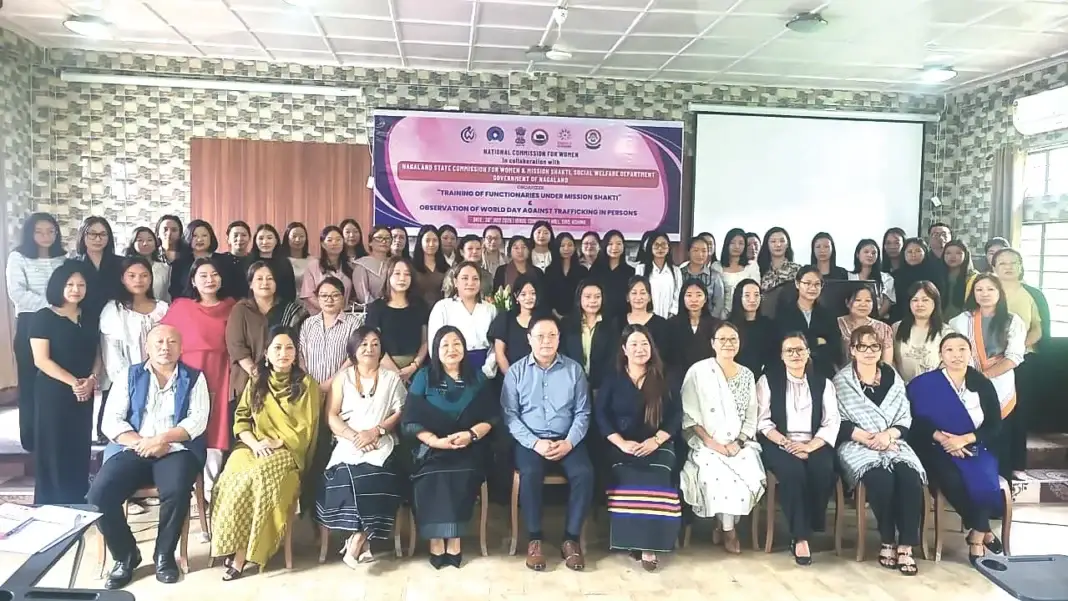
 Photo Courtesy: nagalandpost
Kohima: Human trafficking in Nagaland is shifting toward sophisticated, digital-age criminality. State officials confirmed on July 30 that the region remains a primary source, transit route, and destination for traffickers. While historical crimes involved child domestic labour and illegal adoptions, the trade now links directly to cybercrime, financial fraud, money laundering, and forced labour.
Limawabang Jamir, Secretary and Administrative Head of the Social Welfare Department, highlighted these risks at an event marking the World Day Against Trafficking in Persons. He spoke at the State Institute of Rural Development in Kohima alongside the National Commission for Women and the Nagaland State Commission for Women. Jamir urged stakeholders to abandon passive approaches to this modern crisis.
The Nagaland State Commission for Women chairperson, W. Nginyeih Konyak, emphasized the urgency of the situation during her address. She told attendees, "Human trafficking is a modern form of slavery and it is an ongoing tragedy." Konyak called for immediate, relentless action, noting that the crime exploits the dreams of the vulnerable while breaking their bodies and stripping away human dignity.
Mission Shakti continues to act as the state's primary defense against these threats. The initiative currently manages One Stop Centres across 17 districts and Shakti Sadans in six districts. Between April and June 2026, One Stop Centres processed 125 gender-based violence cases, while the Women Helpline-181 received 53 calls for help. For the 2025-26 financial year, the centres handled 311 cases. The Women Helpline received 2,090 calls, requiring 144 direct interventions for issues ranging from sexual assault and POCSO-related offences to cybercrime and missing persons.
Staff serve despite operational hurdles. Department officials confirmed they are lobbying the ministry to release overdue salary payments. Moving forward, authorities plan to prioritize inter-agency speed between the police, village councils, and student bodies. Social Welfare Director Tosheli Zhimomi directed personnel to coordinate closely with Mission Vatsalya to ensure survivors receive sustained legal, psychological, and economic support.




Comments