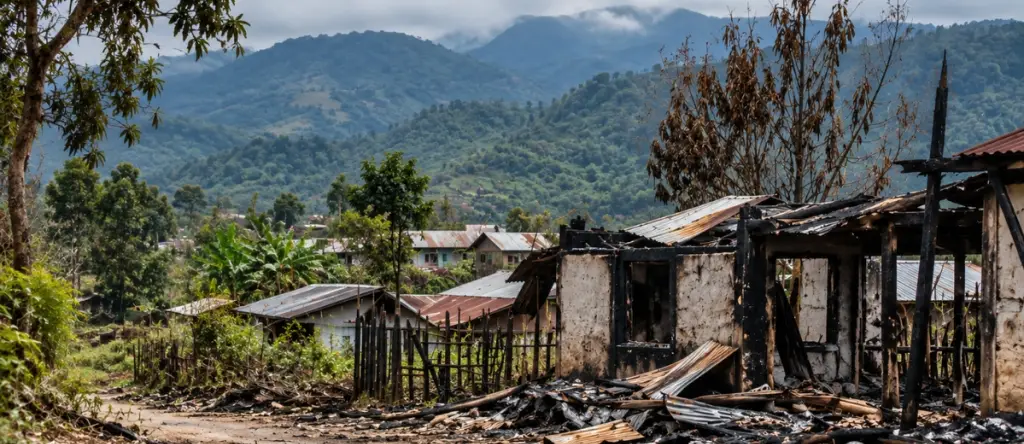
 Photo Courtesy: nenow
Imphal: The Kuki CSO Working Committee-Ukhrul has accused the Manipur and Indian governments of practicing selective justice. The group claims authorities ignore the plight of Kuki-Zo civilians while targeting their community leaders with arrests and legal action.
The committee is demanding answers from the National Investigation Agency. Seven months have passed since the NIA took over the March 11 murder case of Thenkhogin Baite and Thangboimang Lunkim at Thowai Kuki. No progress report exists. The group wants to know who is held accountable for these deaths.
Violence continues to plague the region. On October 3, gunmen abducted 76-year-old Hemjang Haokip from his farm hut in Khunkho Kuki village. His body turned up the next day at S. Golai near Leimakhong with his hands and legs tied. The Khunkho Kuki Village Authority blames the NSCN (IM) for the murder. The committee insists these events reflect a calculated pattern of intimidation and displacement.
Double standards persist. The committee blasted the state for remaining silent after Yarchuiso Kashung, president of Tangkhul Aze Katamnao Long, made remarks about seeking protection from China. They argue that a Kuki-Zo leader making similar comments would face immediate state retribution. The committee stated, "The law cannot be selective. National security cannot be selective. Justice cannot be selective."
Local media also drew sharp criticism. The committee accused news outlets of labeling Kuki-Zo victims as victims of unknown miscreants while branding others as militants. They warned that this bias fuels communal hatred. The group maintains that Kuki-Zo citizens are not collateral damage. They argue that prolonged state silence confirms their fear that the government does not view their lives as equal under the Constitution.

Comments